Back to Content Hub
Video
27 April 2026

Why Employees Still Click Phishing Links - It’s Not What You Think

Understand the psychology behind phishing attacks and why changing behaviour is more effective than relying on awareness alone.

Phishing attacks continue to succeed, not because employees lack intelligence or experience, but because cybercriminals exploit predictable human behaviours. Urgency, authority and familiarity trigger instinctive decisions, making even well-trained users vulnerable to sophisticated social engineering attacks.

In this video, we explore why traditional security awareness programmes often fall short and why organisations need a more engaging, behaviour-focused approach to reducing cyber risk. Rather than relying on annual compliance training, effective security awareness should reinforce good decision-making through realistic simulations, continuous learning and practical exercises that reflect today's evolving threat landscape.

Discover how Robinscroft's Security Awareness Training helps organisations build a stronger security culture, improve compliance and equip employees with the skills to recognise and respond to phishing attacks with confidence.
Related Resources

Explore related resources, guides and insights to help you make informed IT decisions.
Blog
March 31, 2026

From Prevention to Recovery: A Cybersecurity Framework That Works

Our CyberProtect framework is built around five key stages: Prevent, Detect, Respond, Recover and Assure.

Datasheet

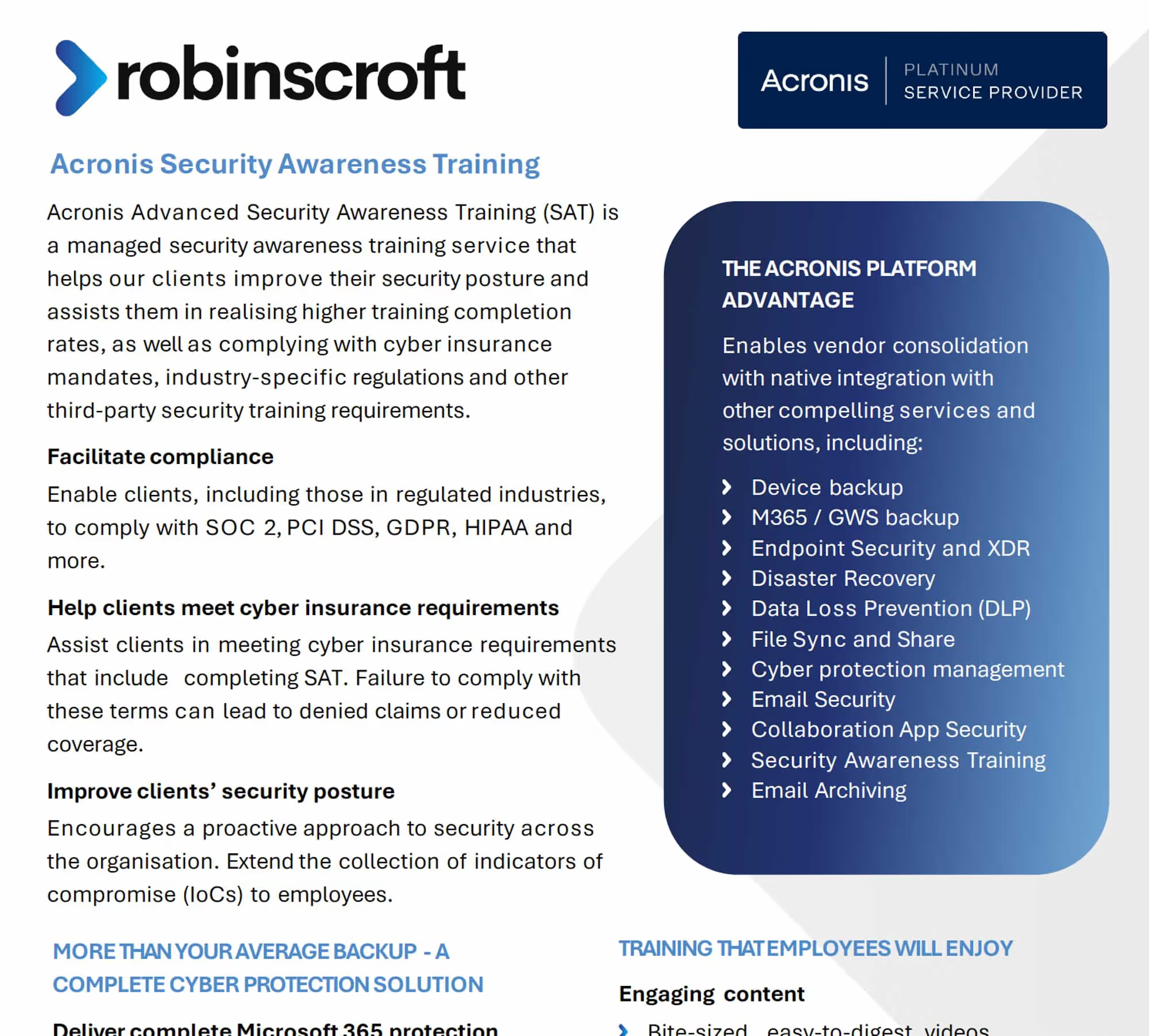
Acronis Security Awareness Training

Acronis Advanced Security Awareness Training (SAT) is a managed security awareness training service that helps our clients improve their security posture and..

Blog
April 20, 2026

Cybersecurity is Dead. Long Live Cyber Resilience.

Cybersecurity can’t stop every attack. Real resilience means staying operational, recovering fast, and minimising downtime when breaches inevitably happen.

FAQs

Related FAQs

Have a question? You may find the answer here!

Isn't antivirus enough?

That was true in 2008. Cybercriminals have moved on since then.

Modern threats are far more sophisticated than the viruses many people associate with traditional antivirus software.

Today's organisations typically need a layered approach that combines endpoint protection, email security, multi-factor authentication, backups, user awareness training and clear security policies.

Antivirus still plays an important role, but relying on it alone is a bit like locking the front door and leaving the windows open.

Are cyber attacks really a threat to small businesses?

Unfortunately, cybercriminals don't check your employee count first.

Small and medium-sized businesses are frequently targeted because attackers often assume defences will be weaker. Every organisation stores valuable data, relies on technology and has systems that criminals can exploit, making cybersecurity important regardless of size.

Can cybersecurity be outsourced?

Absolutely. Many businesses already do.

Outsourcing cybersecurity gives you access to specialist expertise, advanced tools and ongoing monitoring without the cost of building an internal security team.

What's the difference between antivirus and EDR?

Antivirus spots known bad guys. EDR watches for suspicious behaviour.

Antivirus is effective at identifying known malware and threats. EDR goes further by monitoring activity, investigating unusual behaviour and helping contain attacks before they spread. Most modern businesses benefit from having both.

How can we reduce the risk of ransomware?

No single tool can stop every threat. That's why a layered approach works best.

Reducing the risk of ransomware typically involves a combination of multi-factor authentication, security awareness training, endpoint protection, regular patching, email security and secure backups. The goal isn't just preventing attacks, it's making sure you can recover quickly if one succeeds.

What should we do if we suffer a cyber attack?

First: don't panic. Second: don't ignore it.

Disconnect affected devices if possible and contact your technology partner immediately. Quick action can reduce damage, improve recovery times and help protect the rest of your systems.

What’s Cyber Essentials, and do I need it?

Cyber Essentials is the UK’s baseline security standard. If you work with public sector, education, or healthcare - you have to have it. For everyone else, it’s just a very smart idea.

Contact Us

Ready to Get Started?

Let’s talk about how we can support your goals.